Da Vinci had it "easy" the different areas of learning weren't nearly as stratified as now.
Showing posts with label capitalism. Show all posts
Friday, October 21, 2011
really just a few thoughts...
Thought Number 2:
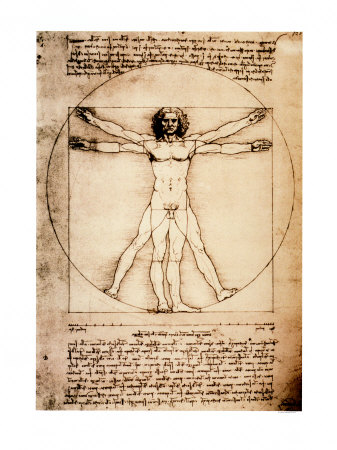
I had this idea of being a renaissance man. Kind of like da Vinci. Yet, the more I looked at the idea, the more I saw it as unfeasible... that is unless I never stopped education. I don't mean simply lifelong learning, I mean like paying to be taught and when I say never, I mean never.
Da Vinci had it "easy" the different areas of learning weren't nearly as stratified as now.
Sunday, January 2, 2011
America the Beautiful and the Despicable
I love America, or I should say the idea of America.
This idea is prevalent everywhere in our republic and its what I love. The Bill of Rights is a great example of this, and America's global greatness is a testament to how well its worked out. I could go on and on, but to sum it up in a sentence, the rights to freedom in America has made it productive, progressive and powerful, to say in a word... great.
Of course there is a point where the idea encounters impedances. Say what you want about partisanship or the taboo degradation (as opposed to moral degradation, taboo degradation is the degrading of things society deems taboo, like sexuality, drugs and rock n roll), but that's not what I am talking about here, and personally I don't think that's the problem; I could say that its merely the fruit of the problem I am talking about. The real problem with America[ns] that I see is ignorant desire for the status quo and greed.
These two play off of each other, we want the status quo because we know how to work it to our financial advantage and we're greedy so we fight for the status quo. This happens in industry, politics, education, labor unions, etc. Prime example: the steel industry in the United States. They were on top of the steel industry world thanks to Henry Bessemer and Andrew Carnegie, anti-trust evasion and World War 2, but then the world caught up. New technologies came in to play, but for whatever reason the industry didn't jump on them like the rest of the world did and they began to lose global market share. The steel labor unions kept striking and asking for more money, which was great for them, but only at first not for the industry at all, as now the overhead increased which served only to work for the competition. The same thing was and probably still is at work in the auto industry; I can see it at work on Wall Street and I can see it working in teacher's unions, congress and the population at large. Point being, we like the status quo, because we can make it work for us.
I don't know what it is about rocking the boat, but what works is rocking the boat and making changes (now I feel like I sound like Obama, but I'm a maverick!), that's the whole reason the government is set up the way it is, and the way the Constitution was written. It was made so that it could change, warp and bend, congress is bicameral, goes through elections every 2 years and is subject to Presidential veto. The idea of amendments was to allow for further change, for instance the electoral college and the way Vice Presidents are elected. With such a historical precedence as that I find it interesting that I see less change, or at least what I perceive.
I'm sure people have probably felt this way in the past, but it seems like the only seemingly Pax Americana was the 90s and maybe the 50s and the 20s. Of course I find it interesting that both of those times eventually gave way to a sort of fall, the 60s for the 50s and the Depression for the 20s and this occured for various reasons, but I wonder if it was for similar reasons that I am speaking of here? The status quo was definitely rocked in the 60s and it was definitely rocked in the 30s and both times I would say that it could have been prevented and I think the comfort of the status quo and the ability to work it for one's advantage probably played a role in why the boat wasn't rocked. We need to rock the boat. Either I'm really pessimistic, or prophetic, but I am led to believe that if we don't rock the boat in some places then it will be rocked for us.
This idea is prevalent everywhere in our republic and its what I love. The Bill of Rights is a great example of this, and America's global greatness is a testament to how well its worked out. I could go on and on, but to sum it up in a sentence, the rights to freedom in America has made it productive, progressive and powerful, to say in a word... great.
Of course there is a point where the idea encounters impedances. Say what you want about partisanship or the taboo degradation (as opposed to moral degradation, taboo degradation is the degrading of things society deems taboo, like sexuality, drugs and rock n roll), but that's not what I am talking about here, and personally I don't think that's the problem; I could say that its merely the fruit of the problem I am talking about. The real problem with America[ns] that I see is ignorant desire for the status quo and greed.
These two play off of each other, we want the status quo because we know how to work it to our financial advantage and we're greedy so we fight for the status quo. This happens in industry, politics, education, labor unions, etc. Prime example: the steel industry in the United States. They were on top of the steel industry world thanks to Henry Bessemer and Andrew Carnegie, anti-trust evasion and World War 2, but then the world caught up. New technologies came in to play, but for whatever reason the industry didn't jump on them like the rest of the world did and they began to lose global market share. The steel labor unions kept striking and asking for more money, which was great for them, but only at first not for the industry at all, as now the overhead increased which served only to work for the competition. The same thing was and probably still is at work in the auto industry; I can see it at work on Wall Street and I can see it working in teacher's unions, congress and the population at large. Point being, we like the status quo, because we can make it work for us.
I don't know what it is about rocking the boat, but what works is rocking the boat and making changes (now I feel like I sound like Obama, but I'm a maverick!), that's the whole reason the government is set up the way it is, and the way the Constitution was written. It was made so that it could change, warp and bend, congress is bicameral, goes through elections every 2 years and is subject to Presidential veto. The idea of amendments was to allow for further change, for instance the electoral college and the way Vice Presidents are elected. With such a historical precedence as that I find it interesting that I see less change, or at least what I perceive.
I'm sure people have probably felt this way in the past, but it seems like the only seemingly Pax Americana was the 90s and maybe the 50s and the 20s. Of course I find it interesting that both of those times eventually gave way to a sort of fall, the 60s for the 50s and the Depression for the 20s and this occured for various reasons, but I wonder if it was for similar reasons that I am speaking of here? The status quo was definitely rocked in the 60s and it was definitely rocked in the 30s and both times I would say that it could have been prevented and I think the comfort of the status quo and the ability to work it for one's advantage probably played a role in why the boat wasn't rocked. We need to rock the boat. Either I'm really pessimistic, or prophetic, but I am led to believe that if we don't rock the boat in some places then it will be rocked for us.
ideas:
capitalism,
economics,
gripe,
politics
Thursday, September 30, 2010
Thoughts from President Cleveland
I read earlier this week that 20% of Americans take home 50% of the wealth, this leaves 50% of America's money to the other 80%. I think this is a rather large income gap, and I don't know if its a good thing or a bad thing, but I am leaning bad thing.
I could argue that its a good thing because this is how supply-side economics works, give the rich their money and they can spend spend spend and when they do that it greases the economy, creating jobs and thereby distributing wealth. And then the libertarian side of me thinks, well this is good as well, because if there are needy Americans the wealthy, with their wealth, can support them by their giving. After all Grover Cleveland said, "[T]hough the people should support the Government, the Government should not support the people." Going on to say, "The friendliness and charity of our countrymen can always be relied upon to relieve their fellow citizens in misfortune." Which is why you give wealthy people money, so they can spend it and give it. I mean its the great libertarian, classical liberal ideal!
Although I do have a slight issue with this, the wealthy with money now aren't necessarily so charitable and generous. I mean lets be real there are far more people spending money and saving money than giving it to those in need. Since reading Radical by David Platt I'm more convinced that Americans are far more concerned with the rat race, keeping up with the Jones, getting their American dream, etc., than ever. The more consumerist a society becomes, the more "dreams" become transmitted through advertising, and the more gullible idiots with money, i.e. everyone, buy into those dreams then try and go get them. So the friendliness and charity of fellow citizens is quickly vanishing to the consumerism and dream acquisition of our fellow citizens.
The idea of supply side economics, kind of like Reagan's, is great if you want to allow a bunch of money into the market. Unfortunately I don't think this works if you leave such tax cuts in for so long that they simply become the market standard. The only way such a policy is going to work is if you raises taxes so you can then cut taxes during another recession, or you just bottom out taxes to reproduce the effects. (I must also say there are some that don't even think it was Reagan's policies that stimulated the economy as much as Carter's. Take that conservatives?)
This all brings me to the idea of taxes. If the wealthy are not distributing their money to the needy do we need to raise taxes to redistribute their wealth for them? I mean the government may not do it nearly as efficiently, but at least they'll be doing it. Or should we not so that the wealthy can spend their money, thereby stimulating economic growth thus distributing it that way? (I must add, I have read some that argue the wealthy aren't spending money so much as they are investing and saving it. Whether or not that stimulates the economy I don't know. I guess by investing it, it puts money into the financial system allowing banks to loan to business which allows business to grow and function.) If this is our choice are we then protecting the rich and thereby allowing wealth to be concentrated with the few?
Cleveland again has something to say to this.
I could argue that its a good thing because this is how supply-side economics works, give the rich their money and they can spend spend spend and when they do that it greases the economy, creating jobs and thereby distributing wealth. And then the libertarian side of me thinks, well this is good as well, because if there are needy Americans the wealthy, with their wealth, can support them by their giving. After all Grover Cleveland said, "[T]hough the people should support the Government, the Government should not support the people." Going on to say, "The friendliness and charity of our countrymen can always be relied upon to relieve their fellow citizens in misfortune." Which is why you give wealthy people money, so they can spend it and give it. I mean its the great libertarian, classical liberal ideal!
Although I do have a slight issue with this, the wealthy with money now aren't necessarily so charitable and generous. I mean lets be real there are far more people spending money and saving money than giving it to those in need. Since reading Radical by David Platt I'm more convinced that Americans are far more concerned with the rat race, keeping up with the Jones, getting their American dream, etc., than ever. The more consumerist a society becomes, the more "dreams" become transmitted through advertising, and the more gullible idiots with money, i.e. everyone, buy into those dreams then try and go get them. So the friendliness and charity of fellow citizens is quickly vanishing to the consumerism and dream acquisition of our fellow citizens.
The idea of supply side economics, kind of like Reagan's, is great if you want to allow a bunch of money into the market. Unfortunately I don't think this works if you leave such tax cuts in for so long that they simply become the market standard. The only way such a policy is going to work is if you raises taxes so you can then cut taxes during another recession, or you just bottom out taxes to reproduce the effects. (I must also say there are some that don't even think it was Reagan's policies that stimulated the economy as much as Carter's. Take that conservatives?)
This all brings me to the idea of taxes. If the wealthy are not distributing their money to the needy do we need to raise taxes to redistribute their wealth for them? I mean the government may not do it nearly as efficiently, but at least they'll be doing it. Or should we not so that the wealthy can spend their money, thereby stimulating economic growth thus distributing it that way? (I must add, I have read some that argue the wealthy aren't spending money so much as they are investing and saving it. Whether or not that stimulates the economy I don't know. I guess by investing it, it puts money into the financial system allowing banks to loan to business which allows business to grow and function.) If this is our choice are we then protecting the rich and thereby allowing wealth to be concentrated with the few?
Cleveland again has something to say to this.
"Communism is a hateful thing, and a menace to peace and organized government. But the Communism of combined wealth and capital, the outgrowth of overweening cupidity and selfishness, which insidiously undermines the justice and integrity of free institutions is not less dangerous than the communism of oppressed poverty and toil which, exasperated by injustice and discontent, attacks with wild disorder the citadel of rule.
He mocks the people who proposes that the Government shall protect the rich and that they in turn will care of the laboring poor"So what are we doing as a society? Simply looking to provide for the needy by means of socialism through high taxes? Or are we trying to simply protect the rich under the guise of supply side economics? I mean if you want such a economic policy to work, as I have stated, you need something to adjust, otherwise it simply becomes the market norm and the market adjusts to it. Me personally? I think we are mocking the people, because I think we are protecting the rich who have influence in Congress and influence Congress to keeping taxes relatively low. I'm no conspiracy theorist, but lobbyist do what lobbyist do, and lobbyist work for those who pay them, and the people that pay money are the people with money, and that ain't the poor. And unfortunately its not the particular slant of our fellow citizens to provide for people in need, like the farmer's in Cleveland's time, more money than the government would have given or does give.
Subscribe to:
Posts (Atom)