
Friday, August 3, 2012
needs to be improved...
I stumbled across this article on Relevant Magazine's website: How to Keep Your Faith in Seminary.
About halfway through I began to realize all of the areas of my own
spiritual life that need to be worked on. I need to spend more time in
solitude doing things like prayer, meditation and devotions/study. Other areas I need to work on are fasting, sabbath, and confession. I'm sure there are more I could come up with, but that's a good enough to do list for now. Of course having a list is important, but just as important is having an idea of how you are going to accomplish what is on the list.


Wednesday, July 25, 2012
Freedom to Fail
 The odd thing about grades is that they have never really been at the forefront of my mind. I mean I've always tried to do well and acquire those good grades, but I've never had to sacrifice my own personal educational ambitions to get them. I most often found myself learning what I've wanted to learn and working towards what I've wanted to work towards within the confines of class and what was being taught and always came away with high marks. Last semester, however, was a different story...
Thursday, July 19, 2012
from culture to the kingdom
I mentioned earlier my view that the Bible as counter cultural; kt is concerned with the kingdom of God as opposed to our human kingdoms and cultures, whatever those may be. The Bible can be, and should be, an incredibly challenging document and we should be humble enough to open ourselves to its counter to our personal cultural affinities.
Yet as counter cultural as the Bible is, it is still incredibly cultured. It is a document that comes from humans and from human culture, not out of the sky and not merely through human penmanship Because of the "humanness" of Scripture its counter culturalness must often be found as it is not always often seen.
Yet as counter cultural as the Bible is, it is still incredibly cultured. It is a document that comes from humans and from human culture, not out of the sky and not merely through human penmanship Because of the "humanness" of Scripture its counter culturalness must often be found as it is not always often seen.
Monday, June 25, 2012
From Morgan Guyton: Four Cringe-worthy Claims of Popular Penal Substitution Theology
I was reading up on Rachel Held Evans' superlatives blog and she quoted a post by Morgan Guyton that was reposted by Jesus Creed. I though it an interesting perspective on penal substutionary atonement theory running through conservative evangelical circles these days. Perhaps I'll write out some of my thoughts on the theory later...
Anyways, here's Morgan's post in full:
I’ve often wondered if the same thing that makes violent video games appealing is why young evangelical guys are so infatuated with penal substitution theology. I figure a scary bad-ass God is cool for the same reason that the loud wet smack of a linebacker knocking the wind out of a quarterback is cool (I was that linebacker once).
I recognize that some guys need to have a God who likes to say “RAWR!!!” but in their zeal over penal substitution, some cringe-worthy and not entirely Biblical assertions are being made. There is a theologically responsible account of penal substitution; it’s part of the mystery of the cross. But I wanted to examine four of the more obnoxious assertions that I’ve heard in what I would call popular penal substitution theology (in places like a recent Steven Furtick sermon I listened to).
1) God is allergic to sin
A pillar of popular penal substitution theology is that God cannot tolerate the presence of sin. I think it’s more accurate to say that sin cannot tolerate the presence of God. The consequence of understanding things the first way is that the cross becomes God’s inoculation for His sin allergy. Ironically, one of the main points of Jesus’ incarnation was to prove that God is not distant and untouchably pure, but rather someone who “eats and drinks with sinners.” Now this doesn’t mean that sin is not allergic to God. People reacted to Jesus’ perfect love and holiness either by repenting of their sin like Zacchaeus did or by lashing out defensively and crucifying Him like the Pharisees did.
It was not that Jesus couldn’t tolerate imperfection but rather that His perfection was intolerable. In John 3:19, Jesus summarizes the relationship between sin and God’s presence: “Light has come into the world, but men loved darkness instead of light because their deeds were evil.” God is light; He doesn’t need the cross to protect Him from our darkness; we need the cross so we can survive entering into God’s light.
2) God sees Jesus instead of us when He looks at us
In the Steven Furtick sermon that motivated this blog post, he said that the reason God gives us His “approval” is because He doesn’t see us when He looks at us but sees Jesus instead. That’s not approval; that’s deception. I can’t understand how anyone could possibly be encouraged by that. God doesn’t need our true selves to be hidden from His view to love us infinitely. His rage against the sin that oppresses us is part of that love. It’s true that Paul tells us to “put on Christ” and says that “in Christ we become the righteousness of God,” but Jesus isn’t a mask that we wear to cover ourselves up; He’s a body in which we become ourselves.
Popular penal substitution theology perverts Paul’s theology because it cannot recognize the sacramental character of the body of Christ from its modern individualist ontology. Jesus is not just our brother who stands in for us before God; He is also the one in whom “all things hold together.” So the substitution Christ provides is really one-to-many rather than one-to-one.
The phrase “in Christ” cannot be understood correctly without recognizing that Christ was already the source of our being as the one “in whom all things were created.” We are not truly ourselves outside of Christ; we are accidental constructions of our social context. It is only when we are “swallowed up” (2 Cor 5:4) by the life that Christ has provided for us that we gain the freedom to be what God has always seen in us. God doesn’t need to see a Jesus mask over our faces to approve us; His unconditional prior approval of us is the reason He sent His Word made flesh to empower us for holy living through our incorporation into His body.
3) Since God is infinite, He is infinitely offended by the slightest of our sins
The legacy of penal substitution theology can be traced to a book called Cur Deus Homo that was written by 11th century theologian Anselm to explain why Jesus needed to be both divine and human. Being from a medieval honor-based society, Anselm thought the primary problem resolved by the cross is the offense that sin inflicts on God’s honor as a king. This became the satisfaction theory of atonement which evolved into penal substitution. Anselm reasoned that because God is infinite, someone who is also infinite (Jesus) had to become fully human to pay the debt owed to God’s honor by humans. Hence the God-man.
When I read Cur Deus Homo, I noticed an interesting phrase that Anselm used to explain why it had to be this way. He says in several places, “It is fitting.” He doesn’t say for whom it is “fitting”
that Jesus pays our debt to God. Does God need it to happen or do we? I think popular penal substitution theology conflates satisfying God’s honor with appeasing God’s anger. They are absolutely not the same thing. We need for God’s honor to be satisfied through Jesus’ blood because otherwise we would not be able to bear the shame of looking into His face.
It is not that God is infinitely unable to understand the moral complexity that is behind our sin. He sees all the mitigating circumstances; He sees the good that we tried to do even in situations where we were ultimately in the wrong. The problem is not that God is an infinitely sanctimonious doosh bag who needed His Son’s blood to get over His pickiness; then it would be a lot easier to make peace with the dishonor we have shown Him. The problem is that we will be convicted and sorrowed to the point of eternal torture to stand in the presence of perfect love and truth without the assurance of Christ’s sacrifice on our behalf. The peasants need the king’s honor to be satisfied; otherwise they live in terror; and that’s why the king Himself paid the price for their sin against Him.
4) God poured out His wrath on Jesus on the cross
The word wrath in Greek is οργή, the root for our word “orgy” in English. When you look at how this word is actually used in the Bible, it’s more mysterious than you might think. It’s not just a synonym for “anger.” Paul tells the Ephesians that they were “formerly by [their] nature children of wrath” (which the NIV theologically edits to say children deserving of wrath). To be a child of wrath according to Paul is to be owned by “the desires of our flesh and senses” (Eph 2:3). It has nothing to do with God being angry.
In Romans 1:18, Paul writes that the “wrath of God is revealed from heaven against all ungodliness and wickedness.” If wrath were simply “anger,” we could expect Paul to elaborate on this statement by cataloguing a series of natural disasters with which God responded to punish humanity’s sin. Instead what we find is an account of the degeneration of humanity through the innate consequences of their sinful behavior. God “hands them over” to their lust, idolatry, etc, but He is not actively punitive independent of these innate consequences in His response to sin. This seems to suggest that God’s οργή is the proliferation of sin itself.
When I read these texts, I wonder if we ought to think of wrath as describing the poison that fills the air and curses the ground when God is dishonored rather than an emotion experienced by a God whom we probably shouldn’t presume to have the same kinds of emotions that we do. In any case, what happened on the cross is that God the Father did not prevent God the Son from being killed by the Jewish religious authorities. He let Him drink the cup of (His/our?) wrath which He came to Earth to drink. But this in no way means that the Father was the executioner of the Son for the sake of His own anger management. When we talk about the Father “pouring out His wrath” on His son, we make Him look like a drunken child abuser.
I cannot find anywhere in scripture that makes the Father the primary agent behind the crucifixion of His Son. The closest is the Suffering Servant passage in Isaiah 52-53 in which we read that “it was the Lord’s will to crush him with pain” (53:10). First, I would contend that the Suffering Servant passage is primarily about Israel’s exile and only secondarily about Christ in His
role as the recapitulation of His people’s destiny. The description of the Suffering Servant cannot be mapped completely onto Christ without compromising Christ’s divinity and the full unity of the divine will.
Secondly, in no place does Isaiah 52-53 describe the fulfillment of God’s wrath as the purpose of the Servant’s suffering. Isaiah 53:5 says, “Upon him was the punishment that made us whole; by his bruises we are healed.” In other words, the purpose of the Servant’s punishment is our wholeness and healing . It neither serves to fulfill God’s ego needs nor some primordial cosmic free market principle of retribution that God is obligated to follow.
We are children of wrath; we are born into a world that sweeps us into degenerative cycles of pain and guilt. “But God, who is rich in mercy, out of the great love with which He loved us even when we were dead in our trespasses, made us alive together with Christ” (Eph 2:4-5). I just don’t see the cross having anything to do with God’s anger though it absolutely does rescue us from the οργη that describes the innate consequences of rebelling against God’s plan for us as creatures.
I really think that these problems in popular penal substitution theology might be a reflection of what Christianity Today has called the “juvenilization” of American evangelical Christianity. When church becomes youth group for adults, explanations that speak on a teenage level become the norm for everybody.
When I was a teenager, the purpose
of being a Christian was to avoid punishment. I expected the rules to be arbitrary and incomprehensible. So it made sense to me to accept a savior who would rescue me from the clutches of the infinitely picky and thoroughly uncompromising High School Principal of the universe. That was the salvation I received when I asked Jesus back into my heart as a 16 year old (after I had already done believer’s baptism at age 8).
But I experienced the metanoia that is true repentance when God spoke to me in 1998 through a little girl selling dolls in the square of San Cristobal de las Casas in Mexico. He told me I could never be a tourist again. That was when I gave my life to His kingdom. That was when my heart was filled with wrath against all the ways that the world dishonors a God whose image was reflected to me through a barefoot indigenous girl. I need God’s honor to be satisfied. I need the cross not only for the sake of my personal relationship with God but because I cannot live in a world where the crucified are not resurrected. Penal substitution is an important part of the rich mystery of the cross — just not in the oversimplified, canned version that has come to predominate our juvenilized evangelical church.
Anyways, here's Morgan's post in full:
I’ve often wondered if the same thing that makes violent video games appealing is why young evangelical guys are so infatuated with penal substitution theology. I figure a scary bad-ass God is cool for the same reason that the loud wet smack of a linebacker knocking the wind out of a quarterback is cool (I was that linebacker once).
I recognize that some guys need to have a God who likes to say “RAWR!!!” but in their zeal over penal substitution, some cringe-worthy and not entirely Biblical assertions are being made. There is a theologically responsible account of penal substitution; it’s part of the mystery of the cross. But I wanted to examine four of the more obnoxious assertions that I’ve heard in what I would call popular penal substitution theology (in places like a recent Steven Furtick sermon I listened to).
1) God is allergic to sin
A pillar of popular penal substitution theology is that God cannot tolerate the presence of sin. I think it’s more accurate to say that sin cannot tolerate the presence of God. The consequence of understanding things the first way is that the cross becomes God’s inoculation for His sin allergy. Ironically, one of the main points of Jesus’ incarnation was to prove that God is not distant and untouchably pure, but rather someone who “eats and drinks with sinners.” Now this doesn’t mean that sin is not allergic to God. People reacted to Jesus’ perfect love and holiness either by repenting of their sin like Zacchaeus did or by lashing out defensively and crucifying Him like the Pharisees did.
It was not that Jesus couldn’t tolerate imperfection but rather that His perfection was intolerable. In John 3:19, Jesus summarizes the relationship between sin and God’s presence: “Light has come into the world, but men loved darkness instead of light because their deeds were evil.” God is light; He doesn’t need the cross to protect Him from our darkness; we need the cross so we can survive entering into God’s light.
2) God sees Jesus instead of us when He looks at us
In the Steven Furtick sermon that motivated this blog post, he said that the reason God gives us His “approval” is because He doesn’t see us when He looks at us but sees Jesus instead. That’s not approval; that’s deception. I can’t understand how anyone could possibly be encouraged by that. God doesn’t need our true selves to be hidden from His view to love us infinitely. His rage against the sin that oppresses us is part of that love. It’s true that Paul tells us to “put on Christ” and says that “in Christ we become the righteousness of God,” but Jesus isn’t a mask that we wear to cover ourselves up; He’s a body in which we become ourselves.
Popular penal substitution theology perverts Paul’s theology because it cannot recognize the sacramental character of the body of Christ from its modern individualist ontology. Jesus is not just our brother who stands in for us before God; He is also the one in whom “all things hold together.” So the substitution Christ provides is really one-to-many rather than one-to-one.
The phrase “in Christ” cannot be understood correctly without recognizing that Christ was already the source of our being as the one “in whom all things were created.” We are not truly ourselves outside of Christ; we are accidental constructions of our social context. It is only when we are “swallowed up” (2 Cor 5:4) by the life that Christ has provided for us that we gain the freedom to be what God has always seen in us. God doesn’t need to see a Jesus mask over our faces to approve us; His unconditional prior approval of us is the reason He sent His Word made flesh to empower us for holy living through our incorporation into His body.
3) Since God is infinite, He is infinitely offended by the slightest of our sins
The legacy of penal substitution theology can be traced to a book called Cur Deus Homo that was written by 11th century theologian Anselm to explain why Jesus needed to be both divine and human. Being from a medieval honor-based society, Anselm thought the primary problem resolved by the cross is the offense that sin inflicts on God’s honor as a king. This became the satisfaction theory of atonement which evolved into penal substitution. Anselm reasoned that because God is infinite, someone who is also infinite (Jesus) had to become fully human to pay the debt owed to God’s honor by humans. Hence the God-man.
When I read Cur Deus Homo, I noticed an interesting phrase that Anselm used to explain why it had to be this way. He says in several places, “It is fitting.” He doesn’t say for whom it is “fitting”
that Jesus pays our debt to God. Does God need it to happen or do we? I think popular penal substitution theology conflates satisfying God’s honor with appeasing God’s anger. They are absolutely not the same thing. We need for God’s honor to be satisfied through Jesus’ blood because otherwise we would not be able to bear the shame of looking into His face.
It is not that God is infinitely unable to understand the moral complexity that is behind our sin. He sees all the mitigating circumstances; He sees the good that we tried to do even in situations where we were ultimately in the wrong. The problem is not that God is an infinitely sanctimonious doosh bag who needed His Son’s blood to get over His pickiness; then it would be a lot easier to make peace with the dishonor we have shown Him. The problem is that we will be convicted and sorrowed to the point of eternal torture to stand in the presence of perfect love and truth without the assurance of Christ’s sacrifice on our behalf. The peasants need the king’s honor to be satisfied; otherwise they live in terror; and that’s why the king Himself paid the price for their sin against Him.
4) God poured out His wrath on Jesus on the cross
The word wrath in Greek is οργή, the root for our word “orgy” in English. When you look at how this word is actually used in the Bible, it’s more mysterious than you might think. It’s not just a synonym for “anger.” Paul tells the Ephesians that they were “formerly by [their] nature children of wrath” (which the NIV theologically edits to say children deserving of wrath). To be a child of wrath according to Paul is to be owned by “the desires of our flesh and senses” (Eph 2:3). It has nothing to do with God being angry.
In Romans 1:18, Paul writes that the “wrath of God is revealed from heaven against all ungodliness and wickedness.” If wrath were simply “anger,” we could expect Paul to elaborate on this statement by cataloguing a series of natural disasters with which God responded to punish humanity’s sin. Instead what we find is an account of the degeneration of humanity through the innate consequences of their sinful behavior. God “hands them over” to their lust, idolatry, etc, but He is not actively punitive independent of these innate consequences in His response to sin. This seems to suggest that God’s οργή is the proliferation of sin itself.
When I read these texts, I wonder if we ought to think of wrath as describing the poison that fills the air and curses the ground when God is dishonored rather than an emotion experienced by a God whom we probably shouldn’t presume to have the same kinds of emotions that we do. In any case, what happened on the cross is that God the Father did not prevent God the Son from being killed by the Jewish religious authorities. He let Him drink the cup of (His/our?) wrath which He came to Earth to drink. But this in no way means that the Father was the executioner of the Son for the sake of His own anger management. When we talk about the Father “pouring out His wrath” on His son, we make Him look like a drunken child abuser.
I cannot find anywhere in scripture that makes the Father the primary agent behind the crucifixion of His Son. The closest is the Suffering Servant passage in Isaiah 52-53 in which we read that “it was the Lord’s will to crush him with pain” (53:10). First, I would contend that the Suffering Servant passage is primarily about Israel’s exile and only secondarily about Christ in His
role as the recapitulation of His people’s destiny. The description of the Suffering Servant cannot be mapped completely onto Christ without compromising Christ’s divinity and the full unity of the divine will.
Secondly, in no place does Isaiah 52-53 describe the fulfillment of God’s wrath as the purpose of the Servant’s suffering. Isaiah 53:5 says, “Upon him was the punishment that made us whole; by his bruises we are healed.” In other words, the purpose of the Servant’s punishment is our wholeness and healing . It neither serves to fulfill God’s ego needs nor some primordial cosmic free market principle of retribution that God is obligated to follow.
We are children of wrath; we are born into a world that sweeps us into degenerative cycles of pain and guilt. “But God, who is rich in mercy, out of the great love with which He loved us even when we were dead in our trespasses, made us alive together with Christ” (Eph 2:4-5). I just don’t see the cross having anything to do with God’s anger though it absolutely does rescue us from the οργη that describes the innate consequences of rebelling against God’s plan for us as creatures.
I really think that these problems in popular penal substitution theology might be a reflection of what Christianity Today has called the “juvenilization” of American evangelical Christianity. When church becomes youth group for adults, explanations that speak on a teenage level become the norm for everybody.
When I was a teenager, the purpose
of being a Christian was to avoid punishment. I expected the rules to be arbitrary and incomprehensible. So it made sense to me to accept a savior who would rescue me from the clutches of the infinitely picky and thoroughly uncompromising High School Principal of the universe. That was the salvation I received when I asked Jesus back into my heart as a 16 year old (after I had already done believer’s baptism at age 8).
But I experienced the metanoia that is true repentance when God spoke to me in 1998 through a little girl selling dolls in the square of San Cristobal de las Casas in Mexico. He told me I could never be a tourist again. That was when I gave my life to His kingdom. That was when my heart was filled with wrath against all the ways that the world dishonors a God whose image was reflected to me through a barefoot indigenous girl. I need God’s honor to be satisfied. I need the cross not only for the sake of my personal relationship with God but because I cannot live in a world where the crucified are not resurrected. Penal substitution is an important part of the rich mystery of the cross — just not in the oversimplified, canned version that has come to predominate our juvenilized evangelical church.
Friday, June 22, 2012
from the bible to the counter culture
This is one of those thoughts that I thought a good while ago and then when I went to write it out I totally lost my train of thought. So, it's sat as an idea for over 7 months.
Then I began to have a conversation with my brother about his disdain for the cult of personality around Mark Driscoll and the theology being taught in a local Acts29 church plant. Maybe disdain is too strong a word, but he does have an aversion to it if only out of frustration. I'll admit I agree with him on a lot of his frustrations, but that's not the point of this post.
The point is the "counter-cultureness" or "otherness" of Scripture.
Then I began to have a conversation with my brother about his disdain for the cult of personality around Mark Driscoll and the theology being taught in a local Acts29 church plant. Maybe disdain is too strong a word, but he does have an aversion to it if only out of frustration. I'll admit I agree with him on a lot of his frustrations, but that's not the point of this post.
The point is the "counter-cultureness" or "otherness" of Scripture.
Friday, March 30, 2012
Why not Momma God?

For instance the image to the right is from the Sistine Chapel's ceiling. It shows God creating the sun and moon, and evidently God is an old man, probably Italian, who sports a long beard and unkempt hair. God of course doesn't look like this, nor is God Italian. God is depicted as temporal and material, both of which God is, wholly, not. There's Jesus, then again Jesus is not all of God, but one of three. Further, God is a man and God isn't a man, nor a woman. God is God.
Saturday, March 3, 2012
Most Honorable Tebow
 Tebow mania... I don't get it... and I don't think many other people get it either, much less the ones who are actually maniacal about it all. He's not that great of a quarterback, at least not yet; of course, that's not the reason people are wild about him anyways.
It's because he's a Christian. And how he goes about being a Christian is iconic. There are plenty of Christians in the NFL, but they aren't star quarterbacks, nor do they have a pose, so they don't stand out.
But I'll be honest, I don't think it's because he has Christian faith, or his position as quarterback. I do think it's about his iconic way of going about his Christian faith.
Friday, February 24, 2012
O! Jacob, how I long to know thee!
 "Oh, you. You just couldn't let me go, could you? This is what happens when an unstoppable force meets an immovable
object. You truly are incorruptible, aren't you? You won't kill me out
of some misplaced sense of self-righteousness. And I won't kill you
because you're just too much fun. I think you and I are destined to do
this forever." Joker in The Dark Knight
"Oh, you. You just couldn't let me go, could you? This is what happens when an unstoppable force meets an immovable
object. You truly are incorruptible, aren't you? You won't kill me out
of some misplaced sense of self-righteousness. And I won't kill you
because you're just too much fun. I think you and I are destined to do
this forever." Joker in The Dark KnightJacob wrestled with God and Joker wrestles with Batman. I wrestle with God, but I like how Joker speaks of the relationship, as oppose to what Scripture says about Jacob's relationship with God.
Friday, February 10, 2012
nothing in full, but not half-empty
I don't have any complete thoughts for today, but two big ones mulling around in my brain are these:
I wonder what the whole issue surrounding Tim Tebow is about. Is there a reason that evangelical Christians flock to him? Is it because there is a dearth of competent and strong male or female Christian role models, i.e. fathers and mothers, in the lives of those who do flock? Or is it something else?
I also wonder about the sexualization of relationships. It seems a lot of magazines, websites and book shelves in book stores are bound and determined to help us get better at sex for the purposes of relationships. Why? Is it because we, as a culture, have centralized our relationships on the act of and acts around sex?
These are just some of my thoughts that I've yet to fully explore.
I wonder what the whole issue surrounding Tim Tebow is about. Is there a reason that evangelical Christians flock to him? Is it because there is a dearth of competent and strong male or female Christian role models, i.e. fathers and mothers, in the lives of those who do flock? Or is it something else?
I also wonder about the sexualization of relationships. It seems a lot of magazines, websites and book shelves in book stores are bound and determined to help us get better at sex for the purposes of relationships. Why? Is it because we, as a culture, have centralized our relationships on the act of and acts around sex?
These are just some of my thoughts that I've yet to fully explore.
Friday, February 3, 2012
here i am, i'd like to go there.
I find it odd that whenever I get the urge to post about how life is going in general all I can seem to discuss is how frustrated I am.
Why can't I just as easily recall that in my life which is going well? Or that in my life that I am striving for outside of what frustrates me?
WELL NO MORE!!! I actually intend to talk about something other than that which frustrates me!
Why can't I just as easily recall that in my life which is going well? Or that in my life that I am striving for outside of what frustrates me?
WELL NO MORE!!! I actually intend to talk about something other than that which frustrates me!
Friday, January 27, 2012
the devil

Friday, January 20, 2012
Insert title here.
Yes, I realize I have not posted in well over too long of a time. I, unfortunately, do not see this circumstance changing anytime soon.
I figure what I should do is either become a master of quippy zingers a la Chandler on Friends
or
I should become a master of witty pithy phrases that make you think.
However, I also do not see that occuring anytime soon. Needless to say, this blog is coming to grips with the power of silence.
I figure what I should do is either become a master of quippy zingers a la Chandler on Friends
or
I should become a master of witty pithy phrases that make you think.
However, I also do not see that occuring anytime soon. Needless to say, this blog is coming to grips with the power of silence.
Friday, December 16, 2011
the power of the symbol
Finally! After too long of a hiatus I actually have something worthwhile to write! It's nice to feel the liberating power of Christmas break, but anyway...
 Symbols are a powerful thing... almost too powerful. The fact that they are so powerful is interesting, because in reality they are nothing. Their power resides merely in social agreement. They have the power to direct, condescend, aid in transcendence, etc.
Think of it, we get angry when someone speaks a vulgar word, or expresses a vulgar gesture.
An A+ on a paper/test is highly regarded whether or not any of the information is retained afterwards.
A diamond is a highly valued gem that is, though rare, merely a crystalline construct of tetrahedral carbon atoms.
A large bicep is understood as strength... i.e. Arm and Hammer. Likewise, fashion. Who makes up the laws of fashion? Are there really any rules that make any sense beyond our social setting's unspoken code of conduct?
 Symbols are a powerful thing... almost too powerful. The fact that they are so powerful is interesting, because in reality they are nothing. Their power resides merely in social agreement. They have the power to direct, condescend, aid in transcendence, etc.
Think of it, we get angry when someone speaks a vulgar word, or expresses a vulgar gesture.
An A+ on a paper/test is highly regarded whether or not any of the information is retained afterwards.
A diamond is a highly valued gem that is, though rare, merely a crystalline construct of tetrahedral carbon atoms.
A large bicep is understood as strength... i.e. Arm and Hammer. Likewise, fashion. Who makes up the laws of fashion? Are there really any rules that make any sense beyond our social setting's unspoken code of conduct?
Friday, December 9, 2011
what it feels like to die... or just finals week
I've been busy since I've returned from Thanksgiving, and it's not about to let up! This is not the most enjoyable time of the year, but for whatever reason it seems to be much more busy than last year, or even last May. Perhaps because I had one or two less exams for those semesters, and perhaps it's also because I wasn't married. Perhaps it's also because I have an internship that requires much more involvement, and I allow it to involve more of me.


Friday, December 2, 2011
two weeks and nothing
So I know I want to post every Friday...
But it's just not working out these past two weeks. I suppose that whats end of semester burn out does, cause my brain is fried. I could write a post... but I'm going to err on the side of not doing so, because I still have a paper due in 4 days that I have not even begun to start on and I have plenty of work to do for my ordination process. So that's my excuse for this week.
Oh.
And Thanksgiving, you're not supposed to do anything the day after Thanksgiving, except go shopping. Since I didn't go shopping, I sat around eating leftovers and hanging out with family. It was nice. That's my excuse for last week.
I would encourage you to read my other blogs though, here's a personal favorite: Lady Gaga:1 Christians:0
 Also, here's some interesting facts and some more facts on the upcoming SEC Championship game. For those of who who could careless about the Bulldogs, Tigers or football... you can disregard.
Oh and GO DAWGS!!!
But it's just not working out these past two weeks. I suppose that whats end of semester burn out does, cause my brain is fried. I could write a post... but I'm going to err on the side of not doing so, because I still have a paper due in 4 days that I have not even begun to start on and I have plenty of work to do for my ordination process. So that's my excuse for this week.
Oh.
And Thanksgiving, you're not supposed to do anything the day after Thanksgiving, except go shopping. Since I didn't go shopping, I sat around eating leftovers and hanging out with family. It was nice. That's my excuse for last week.
I would encourage you to read my other blogs though, here's a personal favorite: Lady Gaga:1 Christians:0
 Also, here's some interesting facts and some more facts on the upcoming SEC Championship game. For those of who who could careless about the Bulldogs, Tigers or football... you can disregard.
Oh and GO DAWGS!!!
Friday, November 18, 2011
grace unlocked
I used to have a problem with grace.
Not the southern genteel type grace... Although, I'm sure I know a few people who think I have a problem with that now.
The grace I had a problem with was specifically with that of forgiveness in God through Jesus; however, the issue revealed itself elsewhere as well, such as being given to generously in some form or another.
My problem was, and at times still is now, that I'd much rather have reciprocity.
Not the southern genteel type grace... Although, I'm sure I know a few people who think I have a problem with that now.
The grace I had a problem with was specifically with that of forgiveness in God through Jesus; however, the issue revealed itself elsewhere as well, such as being given to generously in some form or another.
My problem was, and at times still is now, that I'd much rather have reciprocity.
Friday, November 4, 2011
stupid Jesus
This quote resonated with me:
 "I had stopped saying the word “Jesus.” 95% of the time, I only spoke of
“God.” Or if I had to speak of him, I referred to God the Son, the
second Person of the Trinity, the Logos…names that sounded intellectual
and sophisticated. If I had to speak of the Son incarnate, then I spoke
of Christ, or the God-man. Never Jesus Christ, and certainly never
just Jesus. Loving Jesus, following Jesus, seeking Jesus —
these were the province of fundamentalists, Bible thumpers, Jesus
Freaks, crude Christians who wore WWJD bracelets and listened to Michael
W. Smith and read Max Lucado instead of Jurgen Moltmann."
"I had stopped saying the word “Jesus.” 95% of the time, I only spoke of
“God.” Or if I had to speak of him, I referred to God the Son, the
second Person of the Trinity, the Logos…names that sounded intellectual
and sophisticated. If I had to speak of the Son incarnate, then I spoke
of Christ, or the God-man. Never Jesus Christ, and certainly never
just Jesus. Loving Jesus, following Jesus, seeking Jesus —
these were the province of fundamentalists, Bible thumpers, Jesus
Freaks, crude Christians who wore WWJD bracelets and listened to Michael
W. Smith and read Max Lucado instead of Jurgen Moltmann."
If you want you can read the whole blog whole blog here.
Oddly enough, but not really, I have had a similar experience.
 "I had stopped saying the word “Jesus.” 95% of the time, I only spoke of
“God.” Or if I had to speak of him, I referred to God the Son, the
second Person of the Trinity, the Logos…names that sounded intellectual
and sophisticated. If I had to speak of the Son incarnate, then I spoke
of Christ, or the God-man. Never Jesus Christ, and certainly never
just Jesus. Loving Jesus, following Jesus, seeking Jesus —
these were the province of fundamentalists, Bible thumpers, Jesus
Freaks, crude Christians who wore WWJD bracelets and listened to Michael
W. Smith and read Max Lucado instead of Jurgen Moltmann."
"I had stopped saying the word “Jesus.” 95% of the time, I only spoke of
“God.” Or if I had to speak of him, I referred to God the Son, the
second Person of the Trinity, the Logos…names that sounded intellectual
and sophisticated. If I had to speak of the Son incarnate, then I spoke
of Christ, or the God-man. Never Jesus Christ, and certainly never
just Jesus. Loving Jesus, following Jesus, seeking Jesus —
these were the province of fundamentalists, Bible thumpers, Jesus
Freaks, crude Christians who wore WWJD bracelets and listened to Michael
W. Smith and read Max Lucado instead of Jurgen Moltmann."If you want you can read the whole blog whole blog here.
Oddly enough, but not really, I have had a similar experience.
the monument vs. the mission
My desire as it stands now is to be the pastor of a church. Considering that that church will probably be a United Methodist church, that is if the conference accepts me, will make for an interesting pastorate. The United Methodist Church is not unique, and I know the problems that it is experiencing are hardly unknown elsewhere. However, the challenge will be unique for a guy like me who doesn't hold allegiance to any particular faction within the church, and the allegiances I do hold are to dead guys or ideas and ideals. It will also be unique because I have experienced church outside of the Methodist church and know that not only is it not all that bad, it is in fact quite desirable.
This creates a problem.
This creates a problem.
Friday, October 28, 2011
in the Middle.
When I was in high school, Jimmy Eat World released a song, "The Middle", two things about the song... it was, and still is, very good and it was one of those songs a high schooler could connect to... because you know they're all the same, and you're very different.
 The concept jump back into my head recently. Because it's weird being in the middle. Home becomes very empty because it seems like there's only a few in the middle and it's intimidating trying to find those few in the middle without having to put some of your self on the line.
Here's the song by the way, because if you're anything like me once you get a song in your head you just have to listen to it: Jimmy Eat World "The Middle"
I can think of three areas in my life where I feel like I am predominantly in the middle. Identity, politics, theology.

Here's the song by the way, because if you're anything like me once you get a song in your head you just have to listen to it: Jimmy Eat World "The Middle"
I can think of three areas in my life where I feel like I am predominantly in the middle. Identity, politics, theology.
Friday, October 21, 2011
really just a few thoughts...
Thought Number 2:
 I had this idea of being a renaissance man. Kind of like da Vinci. Yet, the more I looked at the idea, the more I saw it as unfeasible... that is unless I never stopped education. I don't mean simply lifelong learning, I mean like paying to be taught and when I say never, I mean never.
Da Vinci had it "easy" the different areas of learning weren't nearly as stratified as now.
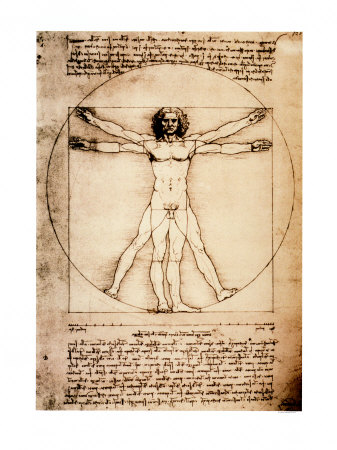
Da Vinci had it "easy" the different areas of learning weren't nearly as stratified as now.
Subscribe to:
Posts (Atom)